Free Math Resources - Worksheets, Activities and Lessons
All you need for your math classroom or homeschool lessons.

Printable worksheets

Free Online Activities

Classroom-ready Lessons
Looking for more engaging classroom activities?
'Gamify' your lesson with a classroom-ready activity pack.
Your kids will be so thrilled, they won't even realise that they're learning!
Free Math Worksheets
Pssst! Have you ever tried using board games in the classroom? They're a great way to get kids to practice basic math skills. Give these tried-and-true kids games a go.
Beginning Math Worksheets:

Several free count and trace worksheets. Ocean & Spring theme. Dot to Dot 1 thru 9, Matching, Shapes theme, Count & Draw & more.
Tons of free first grade worksheets. Fact Families to 12, Graphic Organized Facts Adding, Telling Time Worksheets, Subtraction, Hundreds Chart Worksheets, Word Problems, Addition Sentences to 10, Ordinal Numbers to 10,
Fill in the Missing Numbers, Subtraction Facts to 10, Geometry: Shape Book & more.
Place Value Worksheets:
Create what you want, any digit you need. Find place value for the red underlined digit. Change the problem style to generate different place value format worksheets. Missing number or word numbers.
Free: Hundreds, Tens and Units Picture Cards, Units Number and Units Word Cards. Ordering to 999 & 9999, Place Value Investigation, Writing Numbers as Words, Calculations 10s and 100s, Sequences, Write in the value of the underlined digit 100s to 10000s & more.

Addition Worksheets:

Addition and Subtraction Worksheets
Create your own addition math facts worksheets. Choose from two levels of difficulty & vertical or horizontal equation format: Basic addition: Positive whole numbers, negative numbers & decimals. Create horizontal equations, like: 7 + 3 = __ . Addition with more than 2 addends.
Many free samples off single, double & triple digit addition, missing number & mixed review.
Create timed worksheets, homework or for in-class practice. Decimal capability.
Farm, Jungle & Ocean. Basic Facts, multi-digit, decimal, fill in the blank & regrouping (Carrying).
Spanish & English Addition Generator
Free. Create problems with up to 5 addends, missing addend, carrying or no carrying. Decide font, font size and direction of problems. Hojas de ejercicios de sumar en español.
Hundreds of free worksheets. Facts, Multi-digit, Money, Tic Tac Toe, Algebra, Puzzle, Decimal & Bingo Addition.
Several free printable quizzes. Can be used for timed-test or for practice. Single-digit to triple-digit.
Subtraction Worksheets:
Addition and Subtraction Worksheets
Subtraction Worksheet Generator
Create timed worksheets, homework or for in-class practice. Decimal capability.
Create your own subtraction math facts worksheets. Use them in the classroom for practice or timed drills, or at home! Choose from two levels of difficulty, and vertical or horizontal equation format: Basic subtraction: This level allows the creation of worksheets containing positive whole numbers and zero. Minimum & maximum values can be specified from 0 to 1,000. Advanced subtraction: Offers use of negative numbers & decimals. Horizontal subtraction: Create horizontal equations, like: 7 - 3 = __ . Optional use of negative numbers and decimals.
Free samples. 2 - 6 digit problems, columns & across. Missing numbers, word puzzles, word problems, Subtraction: Numbers 0 to 10 , facts & more.
Design and print your own flashcards. Select the type of flashcards, select the sets of numbers you would like to have and select the size. Free!

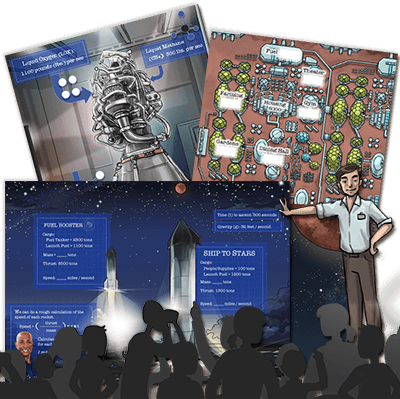
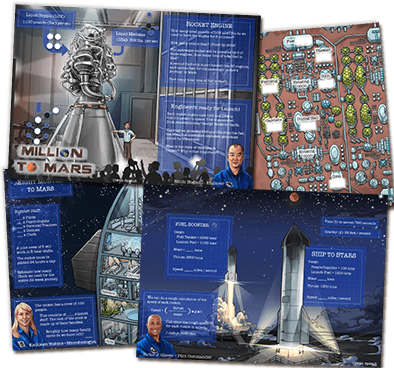
Ready to embark on a maths mission?
This printable math mission puts your students in the pilots seat of a SpaceX mission to Mars!
Guaranteed to ignite students' imagination and make practicing practical multiplication skills fun!
Time Worksheets:
Many free printable samples. Time to the hour, half hour, 15 minutes & minutes. Printable clocks with times. Elapsed Time. Analog & Digital clocks.
Choose a worksheet: What time is it? Draw the hands on the clock. Half-hour increments.
15 minute increments. 5 minute increments. 1 minute increments. Include Answer Key option.
Regular clocks, Unicorn, Fairy, Smurfs, Bird, Father Time & Clown clocks. Print out, fill in numbers and color. Great for an introduction to clocks. For coloring or lessons.
Measurement Worksheets:
Create to practice reading a tape measure in increments of: 1 inch, 1/2 inch, 1/4 inch, 1/8 inch, 1/16 inch, 1/32 inch. Set for: Inches Only, Feet and Inches & option for Answer Key.
Free printables: English & Metric System. Length, Weight, Cups, Pints, Gallons, Temperature & Capacity.
Mostly free upper elementary metric conversion. Pay service has many more options.
Printables include: rectangles & find area & perimeter, measure lines to nearest centimeter, half-inch & inch.
6 different choices: English & Metric Length, weight & capacity Worksheets

Money Worksheets:

Worksheet generator: Coins & Cents, Kindergarten Money, Making Change, Earning Money, Spending Money, Checking Checks Checkbooks, Budgeting & Investing. Pennies, Nickels, Dimes & Quarters with pictures. Euro, American, Canadian & British currency. Free sample & free registration will get you more.
Counting, money addition, subtraction, word problems, rounding & word search.
Multiplication Worksheets:
Multiplication and Division Worksheets
Basic: Positive whole numbers & zero. Minimum & maximum values can be specified from 0 to 1,000. Advanced: Negative numbers & decimals. Times tables: Positive or negative integers. Blank, partially filled in or completed tables. Horizontal multiplication Equations, like: 7 x 3 = __ . Optional use of negative numbers and decimals.
Many free samples of single, double & triple-digit addition, missing number & mixed review. Kakuro Puzzles. Decimals, missing number, word searches, money, measurement & more.
Multiplication Worksheet Generator
Create timed worksheets, homework or for in-class practice. Multi-digit capability.
Farm, Jungle & Ocean. Basic Facts, multi-digit, decimal, fill in the blank & regrouping (Carrying).
Spanish & English Multiplication Generator
Free. Create problems with up to 5 digits. Make multiplication tables, missing factors, double, triple-digit problems. Ejercicios de operaciones básicas en español
Hundreds of free worksheets. Facts & Multi-digit problems. Printable blank or complete multiplication chart (grid). Answers available.
Free printable quizzes. Can be used for timed-test or for practice. Single-digit to triple-digit.

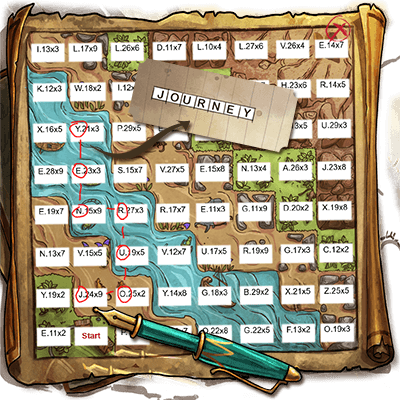
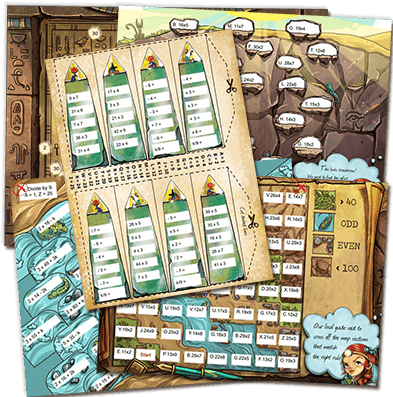
Want to multiply classroom engagement?
Then it's time to gamify learning! Transform your next math lesson into a thrilling treasure hunt adventure with these simple sheets.
Division Worksheets:
Basic: This level allows the creation of worksheets containing positive whole numbers and zero. Minimum and maximum values can be specified from 0 to 1,000 . Advanced: optional use of negative numbers & decimals.
Sheet creator. You decide rows, columns, font, size & type of problem. Create facts, multi-digit, with & without remainders & solutions.
Many free samples of Introduction to Division Concepts (with graphics of pictures), facts, fill in the missing number or the quotient, long, multi-digit by 1 digit column division (no remainders & remainders).
Free printable horizontal time tables. Several different levels & choices. #50 is a answer / practice grid.
Farm, Jungle & Ocean. Basic Facts, multi-digit, decimal, fill in the blank & regrouping (Carrying).
Spanish & English Division Generator
Free. Create problems division facts tables, missing factors, multi-digit, long division problems. Ejercicios de operaciones básicas en español.
Printable worksheets. Facts & Multi-digit problems, mixed with multiplication. Answers available.
Free printable quizzes. Can be used for timed-test or for practice. Single-digit to triple-digit.
Geometry Worksheets:
Shape Worksheet, Rotational & line symmetry, Introduction to Orthographic Projection, Angles & line segments. .
Free PDF Worksheets: Area & Perimeter, Liquid Measure Lab Qaurts, Pints, Gallons, Cups & Ounces, Volume & Surface Area Word Problems & more.
Free samples of High School Geometry worksheets: Points, Lines, Planes Segments, Rays, Distance, Angles, Parallel Lines, Triangles, Circles, Polygons, , Quadrilaterals, Conjunctions
Disjunctions, Perpendicular & Parallel Lines, Conic Sections & more.
Pi, Sphere , Similarity Using Scale Drawings,
Measuring the Earth Grade, Water to the & Max Grade.
Fraction Worksheets:

Free worksheets. Shaded amount, pizza, equivalent fractions, numerators, denominators, improper, mixed, adding, subtracting, multiplying, dividing, divisibility, prime factorization, greatest common factor, Least common multiple, simplify, comparing & ordering fractions & more.
Introduction to fractions, Equivalent, Simplifying, Improper, Mixed, Highest Common Factor, Lowest Common Multiple, Comparing Common Fractions Adding, Subtracting, Multiplying, Dividing & Finding a fraction of a quantity.
Basic Fractions, add, subtract, multiply, divide, compare, reducing, improper, converting to mixed numbers & converting fractions.
Comparing Decimals & Fractions, Mixed Numbers, Missing Num-erator or Denominator, Least Common Multiples, Greatest Common Factors.
4 basic operations with fractions & mixed numbers. Choose like or unlike fractions & control values of numerator/denominator. Equivalent & simplifying fractions & mixed numbers. Ejercicios de fracciones en español.
Decimal & Percentage Worksheets:
Create sheets for practice in changing percents to decimals, or decimals to percents, or have mixed problems. Ejercicios de convertir porcientos en decimales o viceversa en español.
Basic decimals (tenths & hundredths) add & subtract.
Percents - Write fraction & decimals as percents, shaded area, ratio & interest.
Free worksheets: Adding, subtracting & comparing decimals.
Units & Tenths in words. Fractions to Decimal, addition, subtraction, multiplication& division to the Thousandths (Four Digits)

Algebra Worksheets:
Select number of each type of equations: One-step & Two-step Equations, Combining Like Terms, X's on both sides,Distributive Property, Systems - solve for x & y, solve by adding & subtracting Quadratics - ax2+bx+c=0, simple or difficult factorable & many more options.
High School Algebra Worksheets
Drawing culmulative frequency graphs, Solving Linear Systems, Graphing, solving & writing equations for ellipses, Introduction to gradients & intercepts, Simply algebraic terms & much more.
Quadratic Equation Worksheet Maker
Generates a printable worksheet of problems answer key. Choose your options & click 'Make Worksheet'.
Order of Operations Worksheet Maker
Multiplication, One step, addition, & subtraction equations & two step equations.
Printable worksheets. Basic middle school Algebra: Addition, Subtraction, Multiplication & Division.
A pay service that offers some free examples. Algebra 1 & 2 Mixed Review. Scroll down lower & find many more: Algebra Word Problems & Critical Thinking Problems Equations: Algebra Basics, Solving Problems & Number Puzzles, Exponents & more.
Our Best Game Idea - An Escape Room Adventure!
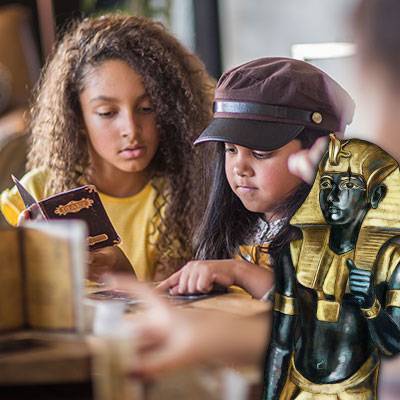
Classroom escape room games engage the whole classroom. Every. Single. Time!
They're not just games, they're valuable learning experiences that develop critical thinking skills, refine group communication, and engage multiple learning styles at once.
Worksheets can easily be integrated into a classroom escape room game as another puzzle that students must work together to solve.
Read our guide here to discover how you can use escape room games to reignite creativity in your classroom.
Online Math Games:
Beginning Math Games:

Numbers Sequencing. Numbers: How Many? Shapes: Same or Different? Taller or Shorter? Number Sentences. Addition and Subtraction.
Math and much more. Great links to tons of educational games and online activities.
Recognizing pattern sequences is important for early math development. Practice patterns.
Place Value Games:
What is the largest number you can make? Use numbers & place them in the place value that will give you the greatest number possible.
Great to practice expanded notation. Match each number written in standard form with its correct corresponding number written in expanded form.
Look at the number on each shell. Click on the nearest ten. Collect a sand dollar each time you choose the correct answer. Keep track of how many sand dollars you get.
Save downing swimmers by clicking how many tens & ones.
Ones & tens. Uses base ten blocks. Count the number in the tens & the number in the ones & select the correct answer.
Another great game to help build the important foundation of place value. This game is times and includes decimals. (Tenths & hundredths).
Practice place value skills with expanded notation. Matching game where you determine which number equals 400 + 30 + 6.
Ones to Thousands. Computer gives a number, you click the place value amounts needed to make number. (Expanded Notation).
Addition Games:
Online addition flashcards. Keeps track of number of correct & incorrect answers.
Addition & Subtraction math facts game. Pick level and answer single-digit, double-digit & triple-digit problems.
Online addition test. Customize to your need. The number of questions you want and the level of difficulty.
Addition & Subtraction math facts game. Pick level and answer single-digit, double-digit & triple-digit problems.
Great game for double-digit plus single-digit addition practice. Watch Scooby-Doo race with every correct answer - timed.
Subtraction Games:
Online Subtraction flashcards. Keeps track of number of correct & incorrect answers.
Subtraction & Subtraction math facts game. Pick level and answer single-digit, double-digit & triple-digit problems.
Online Subtraction test. Customize to your need. The number of questions you want and the level of difficulty.
Plays like the game show "Who wants to be a millionaire?" get the subtraction answer correct and move up in the money. Double-digit and above.
Time Games:
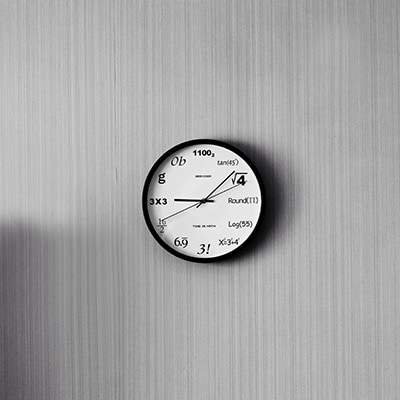
Convert the analogue clock to the digital format. It keeps track of how many are answered wrong or right.
Time word problems designed for first/second/third grade practice with time problems using real life routines and hours of the day. Plays like "Who wants to be a millionaire?"
This activity allows the user to input a time and see it displayed on the clock. The user can also choose to have a random time displayed and try to correctly identify it.
This activity allows the user to practice determining the elapsed time when given a starting time and an ending time.
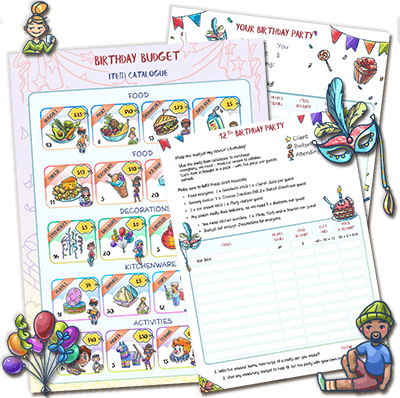
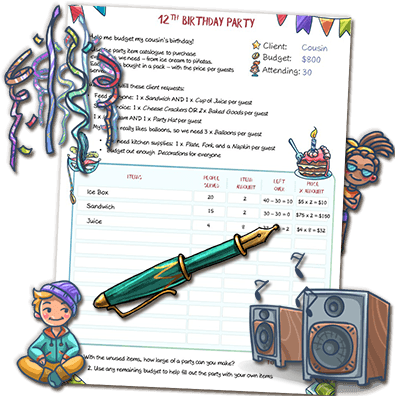
Make learning to budget simple and fun!
Kids will adore planning their dream party, and you will cherish the stress-free lesson. Just download, print, and you're all done!
Measurement Games:
Shows you a ruler with a red bar above it. Click on the length of the red bar. You can play with centimeters or inches. Easy Centimeters, Medium Centimeters, Hard Centimeters, Easy Inches, Medium Inches, Hard Inches & Super Brain Inches.
Online quizzes for 5th grade to adult. Covers distance, area, volume in metric or English system.
Simple interactive chart that will convert: Centimeters meters, kilometers, inches, feet, yards, miles, grams, kilograms, ounces, pounds & tons.

Money Games:

Online activity where you pick the level & currency & prices for a product are given & you must give the correct amount of change.
Games include: Dollar dive, Coin memory game, Painting coins, Break the bank (knowledge of coins), Quarter explore (states & quarters) & non-coin U.S. learning Government games.
3 levels for 1st to 5th grade. Click money in register to the amount need to make purchase.
Simple. The computer shows various coins, you enter the correct amount, Keeps your score.
Multiplication Games:
Click on the flashcard to begin the game. Multiply to solve the problem shown. Type in your answer, then press enter. Race against the clock & solve as many problems as you can in 2 minutes!
Several different games covering practice the times tables, Interactive Flash Cards, bingo, matching games & much more.
Online quizzes facts 1-10 and random setting. Great for practicing math facts. The computer will tell you, "Good job." if you get the answer correct.
Just like the TV show. Questions get increasingly harder. Great practice for double-digit with zeros.
10 different quizzes students can take right now on the computer. Scroll down a little form multiplication. The site covers many elementary math subjects.

Division Games:

Online quizzes facts 1-10 and random setting. Great for practicing math facts. The computer will tell you, "Good job." if you get the answer correct.
You get a math problem. Enter the answer to the problem & hit the "Swing" button. If your answer is correct, you will get a hit. It will decide if the hit is a single, double, triple, or home run based on the difficulty of the problem. Wrong answer & you're out!
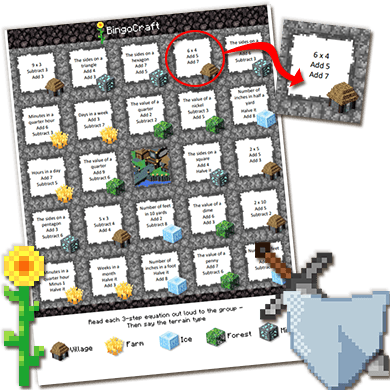
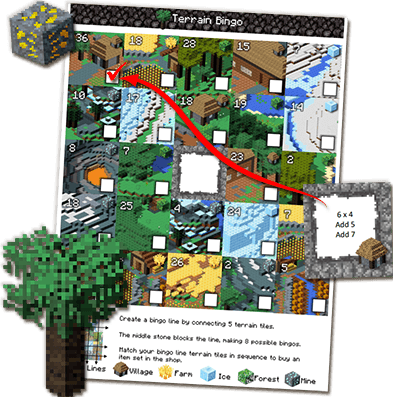
Ready to supercharge your classroom?
This whole-classroom math activity transforms 'dull' mental math practice into an engaging contest.
This is a math game that kids WANT to play!
Geometry Games:
Explore symmetry, tessellations, and much more by dragging polygons to create what ever you want: houses, animals, boats, etc.
Several activities to explore tessellations. Start by putting people of the town in a row & move on to houses, trees, etc. At the bottom there are more games.
Computers shows a shape on grid paper & will ask you what the perimeter of the shape is. It does it by units only.
Computer shows a shape on grid paper & will ask you what the area of the shape is. It does it by units only.

Fraction Games:
Several different quizzes students can take right now on the computer. The site covers many adding, subtracting, improper fraction & decimals.
Decimal & Percentage Games:
It will show you your dinner bill and the percent tip you should leave. You must calculate the correct tip to leave the penguin waiter. Several Levels.
Algebra Games:
Earn a game piece each time you answer question correctly. Asks players to solve linear & quadratic equations with one variable. Choose difficulty level, question types & time limit.
Great 5 question basic Algebra quiz, click & see answers, click & get new questions, click & see a review of problem, click & print out a worksheet.
Test your algebra skills by answering questions. This quiz asks you to solve algebraic linear and quadratic equations of one variable. Choose difficulty level, question types & time limit.
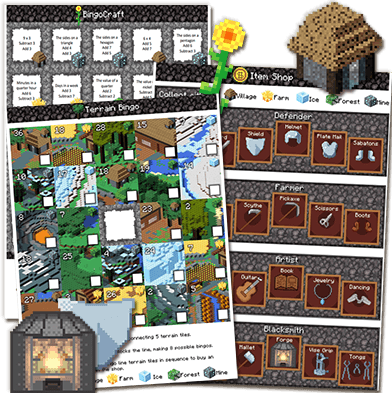
Thrill your kids into learning with these printable classroom activities:
Math Lessons
Beginning Math Lessons:
A pay service with some nice free samples. First Grade mixed review for beginning, middle and end of the year.
First Grade lesson plans for math including: Chance and Uncertainty, Measurement, Number Concepts & Operations, Patterns, 2nd Grade Transformations & more. Click for Kindergarten. Click for Second Grade.
Place Value Lessons:
Lesson uses children's literature, place value puzzles & games to teach place value in a fun & interesting way. It consists of two parts: Part I - Place Value of Digits in a multi-digit numeral & Part II - A Human Place Value.
Interactive lesson that goes step-by-step to explain place value.
Addition Lessons:

This online lesson you can learn: How do we add whole numbers in writing, how do we add decimals & regrouping. Great examples.
Scroll down a little & see such lessons & activities as: Addition Grab Two - A two-player game for addition practice with printable number cards. Several more links to addition lessons.
Objective: Students work to memorize facts and check this memorization with timed tests. Uses: Manipulatives, flashcards, flashcards to take home, ziploc bags, letter to be sent home, laminated-magnetic football, bell, basic fact games, addition & subtraction bingo & worksheets.
Subtraction Lessons:
Online basic teaching of subtraction: Objects, numbers, words, equations, one - seven digit numbers, tens, with & without renaming, mental math, estimation, money, decimals, time, pounds, ounces & more.
Objective: Students work to memorize facts and check this memorization with timed tests. Uses: Manipulatives, flashcards, flashcards to take home, ziploc bags, letter to be sent home, laminated-magnetic football, bell, basic fact games, addition & subtraction bingo & worksheets.
Dr. Seuss I Can Lick 30 Tigers Today
First grade: The main character reduces the number of opponents through various excuses. The number goes from 30 to 29 to 22, etc. It can be a giant word problem. The story is also an interesting example of a word problem. If the cat (the main character) started with 30 tigers & ended with 1, how many tigers were sent away?

Time Lessons:
5 lesson on telling time. Hours, half hours, 5 Minute Intervals, Two Ways to Read the Time & Elapsed Time.
Ready to embark on a maths mission?
This printable math mission puts your students in the pilots seat of a SpaceX mission to Mars!
Guaranteed to ignite students' imagination and make practicing practical multiplication skills fun!
Measurement Lessons:
Several free lessons on Time
Metric System, Mass, Length, Volume & Temperature Conversions.

Money Lessons:
K-12 lessons. Coin Poems, Design a Coin, Cutting Costs With Coupons, Estimation & more.
Many free lessons & activities like Calendar Money, Coin Poem & Chant, how would you spend $1million, & more. K-3.
Teaches pennies, nickels, dimes & quarters & then asks counting questions.
Multiplication Lessons:
Online lesson teaching the first step in understanding multiplication - a fast way of adding a series of numbers. Continues with step-by-step lessons.
Free, interactive math exercises, lessons, and games teaching multiplication tables, fact & multiplication of whole numbers, decimals & fractions.
Division Lessons:

Online lesson teaching an important concept of division - a fast way of subtracting a series of numbers. Includes examples.
Here's another game for you:
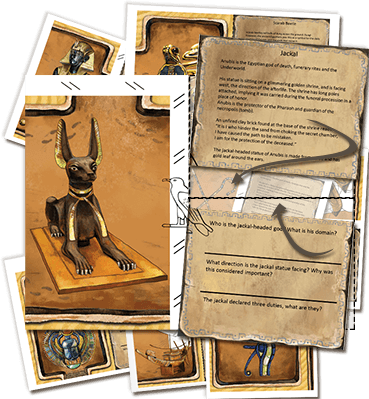
Take your students on a gripping quest through Tutankhamun's tomb.
This worksheet guides them through fascinating Egyptian history, while teaching them to identify the main elements of each story thread.
Geometry Lessons:
Several free lessons on Time
Metric System, Mass, Length, Volume & Temperature Conversions.
Search of hundreds of Geometry teaching tips & lessons. From Fundamentals of Geometry to Pythagorean Theorem & its many proofs.
Pi, Sphere , Similarity Using Scale Drawings,
Measuring the Earth Grade, Water to the & Max Grade.
Fraction Lessons:

Collection of lesson & plans on fractions & decimals. From "Apple Pie Slicing" to "Working with Fractions Using Pattern Blocks".
All levels. thematic units, exploring, addition, subtraction, multiplication & division of integers, decimals & fractions, Fractions Are All Around Us, Identify equal fraction, Cuisenaire Rods, Comparing, Ordering & many more.
Online 4 step lesson that defines fractions, improper, reciprocal & Equivalent fractions, mixed numbers. Lesson to goes more in depth, then examples & then a "workout"
Online Fraction Lesson / Worksheets
Introduction to fractions, Equivalent, Simplifying, Improper, Mixed, Highest Common Factor, Lowest Common Multiple, Comparing Common Fractions Adding, Subtracting, Multiplying, Dividing & Finding a fraction of a quantity.
Spanish Version
Step-by-step study of: Basic, Adding, Subtracting, Comparing, Converting, Dividing, Multiplying & Reducing Fractions. Divisibility Rules to help Simplify Fractions & Relationships.
Decimal & Percentage Lessons:
4 step interactive lesson with explanations, examples & work.
Online Decimal Lesson
Meaning of Decimals & Percents. Converting & more.
Collection of teacher submitted lessons.

Algebra Lessons:
Collection of lessons, calculators, and worksheets created to assist students and teachers of algebra.
Subject directory. Gives step-by-step instructions & examples. Preliminary, Beginning & Intermediate Algebra Topics. Solving Word Problems.
Covers everything from Absolute Value, Functions, Polynomials & Negative Exponents to Proportions & Ratios, Rational Functions, Scientific Notation & Factoring Quadratic Expressions.
Calculus
Collection reference materials to learn or teach Algebra. Formulas & examples. Everything is covered! From Algebraic Equations, Field Theory & Quadratic Forms to Number Theory, Wavelet & Polynomials.
It's Time To Level-Up Your Next Lesson!
Wake up snoozing students by transforming your next lesson into an adventure they'll lOVE.
These printable classroom activities 'gamify' learning to make it FUN!
Guaranteed to ignite your students imagination, develop critical thinking, and take all the stress off your shoulders!
Or, Save 50% by grabbing 4 math activity kits in one bundle
Only
18
Thrill your class again and again with this ultimate value-pack. You get our four BEST math games: